
Feedback for student writing
Feedback students actually use.
The best writing feedback is specific: one rubric trait, one place in the essay, one move to make. Here is what that looks like, and how Grade Our Essays drafts it for every student while you stay in charge.
No credit card required.
What works
Three things useful feedback does
Tied to one rubric trait
Points to a place
Names one move
Constructive feedback examples
Instead of this, try this
Examples for an argumentative essay. The pattern works for any genre: name the trait, point to the place, give the move.
Evidence
Instead of: Add more evidence.
Try: Your second paragraph says the program saves money but does not show it. Find the budget number in the article and quote it right after your claim.
Explanation
Instead of: Explain more.
Try: After the quote in paragraph 3, add a sentence that starts "This shows..." and connect the quote back to your claim.
Organization
Instead of: Work on your organization.
Try: Your conclusion brings in a new reason. Move it into the body as its own paragraph, then end by restating your claim.
Conventions
Instead of: Watch your grammar.
Try: Three sentences in paragraph 2 run together. Read it aloud and add a period wherever you pause.
Strength
Instead of: Good job!
Try: Your opening question makes the reader want the answer. Keep it, and answer it directly in your thesis.
How Grade Our Essays does it
Revision steps for every student, every trait
Each student gets next revision steps built on the same pattern. You review them with the scores and release them when you are ready.
- What needs work, named by rubric trait
- Where to look, quoting the student's own sentences
- The revision move to make
- A self-check so students know when they are done
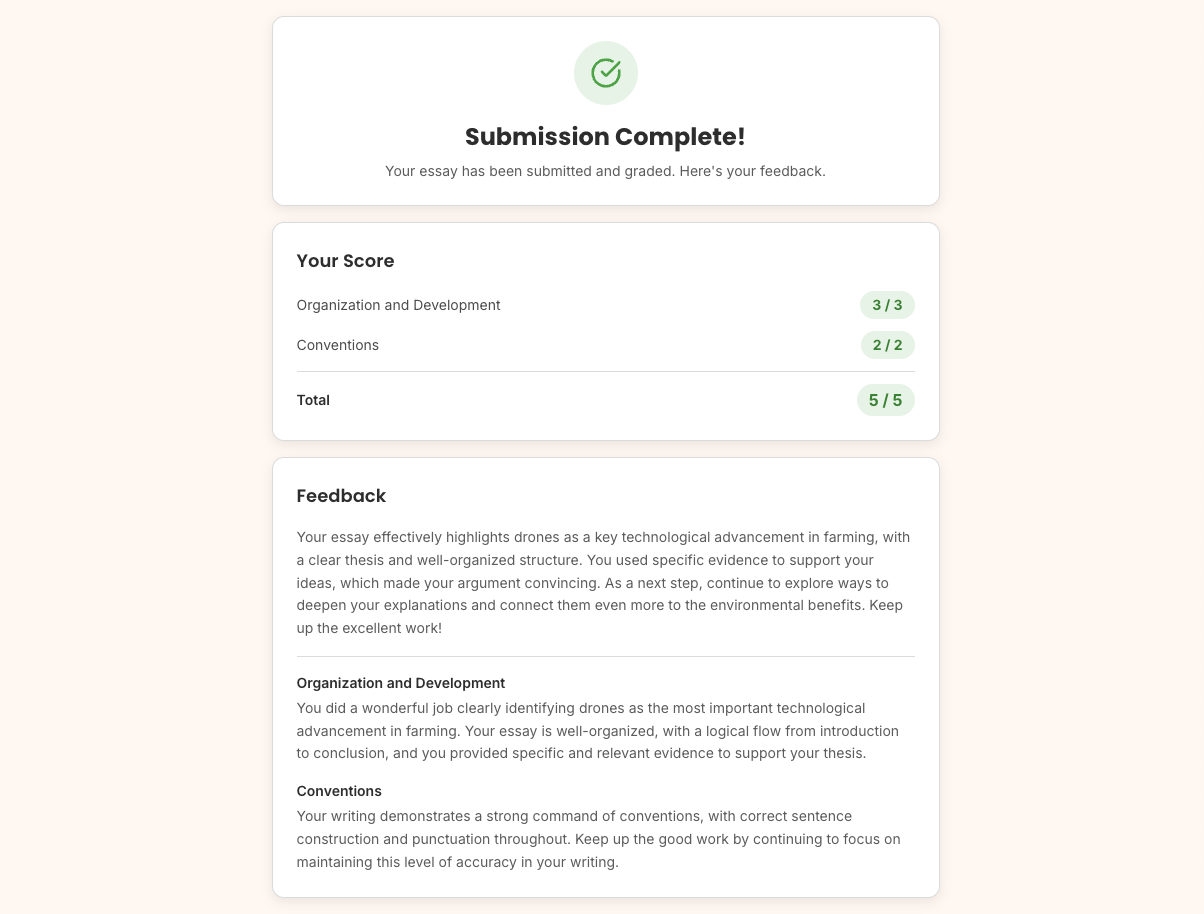
What students see
Scores, your comments and next steps in one place
FAQ
Questions teachers ask
What does good feedback on student writing look like?
It names the rubric trait, points to a specific place in the essay, and gives one revision move the student can make now. Generic comments like "add detail" rarely change the next draft.
Can AI give students useful writing feedback?
Yes, when it is tied to the rubric and checked by the teacher. Grade Our Essays drafts revision steps for each trait, quotes the student's own sentences, and holds everything until you review and release it.
Can I edit the feedback before students see it?
Yes. You can change any score or comment, and you choose when feedback is released to students.
Is the feedback written at my students' level?
Revision steps are written in plain language for students, and they quote the student's own writing so the advice is concrete.
Does it work for short constructed responses too?
Yes. Pick an SCR rubric and short answers get feedback on the same terms they will be scored on.
Give every student specific feedback this week
Assign a prompt, let students write, and review drafted revision steps for the whole class before you release them.
Start your free 14-day trial